Sunday, July 29, 2012


When Dave finished his legal work in Nairobi, we flew down to the Maasai Mara.  We landed on a gravel runway out in the mara (African savannah grassland) and we stayed at the Fairmont Safari Club—in a tent on the Mara River.  There was a whole pod of Hippos in the river right outside our tent and they are VERY noisy!  Each day we went out with a guide on safari and were completely enchanted by the beautiful African animals that cover and graze in that land.  We saw them all—except for a leopard.  We watched lions stalking herds of animals for a kill, we saw thousands of wildebeest and zebra migrating to feed on the lush grasslands, we saw giraffe, elephants, hyena, cheetah, monkeys, ostrich, Thompson gazelle and all other kinds of antelope type animals, rhino, beautiful birds and so so much more.  Our guide, Samuel, was very knowledgeable and good at tracking.  We had bought a new telephoto lens for the camera before we left and took some of the most incredible pictures.  One of the highlights of our trip was visiting a Maasai village.  They are one of the few tribes in Africa that have really kept their unique culture and dress.  We sat with the Chief and he was so open to telling us everything about the people and the culture.  The women sang and danced for us—and the men danced with this low, gutteral sound they make.  Part of their dancing is taking turns jumping very high.  They stretch their ear lobes and wear lots of beaded jewelry pierced into their ears and around their bodies.  They live only on milk and the blood of their cows—with some meat now and then—no fruits or vegetables.  Their lives are very simple and regulated by the culture.  It was fascinating.  We bought several items from the tribal people who had made them—and took their pictures.
We had a special experience at the hotel in Nairobi.  After several days of our going in and out-- with our missionary badges on--many of the doormen and bellmen would ask us to pray for them and they all became very friendly.  Finally we told them we would bring them some special literature.  We got some Books of Mormon, Plan of Salvation pamphlets and "Pass Along" cards and presented them to all of them on our last day.  They were so thrilled.  We keep praying that they will read the book and their hearts will be touched.  Our badges draw so many people to us with questions and comments.  We LOVE IT!!!


The beautiful African savannah grassland.  The giraffe eat the acacia trees up to this height--as far as they can reach.


Baby hyena are always born black.  It's rare to see one because the mom usually keeps them hidden in the den.

The lions are usually in prides of 15 or so.  Life in the wild is a bit hard for these young males--we felt a little sorry for them, but we sure kept our distance.


We had a little flat tire in the safari vehicle.  Luckily it was not in a dangerous spot and we were able to get out for a minute.  We were with a couple from Washington DC.


These fellows-cape buffalo--are as mean as they look.  However, the bird on his nose is his friend.  They sit all over the grazing buffalo and eat the tics, lice and other insects off of them.  Isn't that a symbiotic relationship?

Giraffe are some of the most graceful, beautiful animals in the wild.  They were everywhere.


This is our tent camp on the Mara River.  We had hoped to see the "great migration" where thousands of wildebeest, zebra and Thompson gazelle migrate every year to the better grasslands and cross the Mara River with crocs leaping to get them and lions stalking them on both sides of the river.  However, nature does its own thing and they were still down in Tanzania--the crossing is late this year.

 The Maasai women sang to us.  There were about 150 members of this village--built in a circle and lined on the outside with a hedge of thorn bushes to keep out the predators.  They bring their cows into the center of the village at night to protect them.  During the day they graze outside in the grasslands.
 The Maaisai men danced.  Most of them--and the older boys-- were out watching the cattle, sheep and goats grazing.  Their wealth is determined by the number of these animals they possess and they watch and care for them very carefully.

 These are fearless warriors.  The only weapons they carry are a club and a homemade knife.  They have to deal with lions coming after their cows and they kill them with these weapons.  It is considered important to have killed a lion to be a "man" or a "warrior"  This causes a little bit of conflict with the conservationists!

 Their houses are always built by the women.  They are made of wood poles covered with grass and then "frosted" inside and out with a thick layer of mud and cow dung.  The roof is sod.  These will last 15-20 years--and then they have to build a new one.  They are very small and some of the women have 5-10 children.  This picture shows the whole of the inside.  Dave is sitting with the chief of the village on what is the only bed.  They build a fire in the center.  It is a polygamist society--men with man cows can buy more wives.

As always, the children were so adorable.  They had not toys, but that didn't deter them at all.  These are trucks and cars they had made out of rocks and mud--and they were having so much fun with them!


They do not use matches to build a fire.  This is a Maasai man making his fire--it's quite a process.

This is the village chief--who spoke very good English.  However, most of the other people in village spoke only their language.  He was very open with us and we were impressed with his leadership and his love for his people and his culture.


This is the little plane we flew on to the Maasai Mara and landed on the gravel runway.


Saturday, June 16, 2012


Our plane was leaving for Aksum early in the morning, so we were coming down the mountain in the hotel bus.  To our amazement, everywhere were people coming out of their little homes—tukul huts—dressed in their finest and heavily laden with sacks and bunches of things to sell or trade in the Saturday market.  They were driving donkeys loaded with all manner of things and driving goats and sheep—probably to sell or trade.  Some of them would walk 30-40 kilometers up the hill to get to the market—we could tell it is a big weekly event!  We flew to Aksum and made it a point to go to the Saturday market day there.  It truly was like going back in time—in fact the whole visit to Aksum was like were caught in a time warp.  Men and women walking the dusty roads in sandals with long robes on and heads covered—often carrying a stick.  I felt like we were in Galilee or Jerusalem at the time the Savior lived.  There were camels on the streets carrying burdens—along with donkeys, sheep and goats—everywhere.  The only cars were tourist vans and a few little blue taxis.  We toured all the ancient sites—many of which go back 2000 years BC.  Archeologists have only begun to explore and discover all that is there.  We stayed in the Yeha Hotel which was on a hill overlooking the Stelae park and the whole city.  The stelae were markers of ancient tombs.  Several stood 11-13 stories high and were beautifully carved with false doors and windows—almost like a tower with an imaginary stairway to heaven for those who had died.   We explored the few uncovered tombs.  The Ark of the Covenant is in Aksum!  Can you believe it?  All Ethiopians do!  It is kept in a special building in the city between a monastery and the main church—however, no one can see it except a special monk whose calling it is to maintain it.  There is a legend that the Queen of Sheba (in ancient Yemen) had a son by King Solomon (of the Bible) named Menelik (“Son of the Wise”) who became the first Jewish King of Ethiopia in 950 BC and he brought the Ark with him to keep it safe.  Then Christianity was introduced in about the 3rd century AD—and again the people today are extremely devoted and believing.  (See Acts 8:27-39)  We wanted to attend a service on Sunday morning before flying back to Addis Ababa, but the service was 3 ½ hours in length and you are required to remain the entire time.  We would have missed our plane.  So we stood on the hill above the church early in the morning listening to the drums and chanting calling the people to worship.  We watched as they flocked from everywhere to the church which holds about 3000—and then they stood all around on the grounds where the chanting was able to be heard.  They were all dressed in white with the white woven cotton shawls (habesha ne Tele) over their heads and shoulders.  It was an incredible and spiritual experience for us to watch and hear all of this from the hill.  It is our hope and prayer that one day they can know the truth—as I truly felt their forefathers had—and find again the joy of the restored gospel.


Families coming from all over the countryside to Saturday market in Lalibela.


Again, the women carry everything on their backs.


A country family in Lalibela, Ethiopia--mother, grandmother & daughter


The ancient overlaps with the modern--so amazing!


Market day in Aksum, Ethiopia.  We were the ONLY white people there.


These baby carriers are family heirlooms.  They're made of leather and decorated with shells.  They are handed down from generation to generation.


The men are all buying special sticks used in threshing the harvest of teff.


The women weave these beautiful colored baskets.  The large ones are used to carry "injera"--the bread they make from teff--when they visit other families.


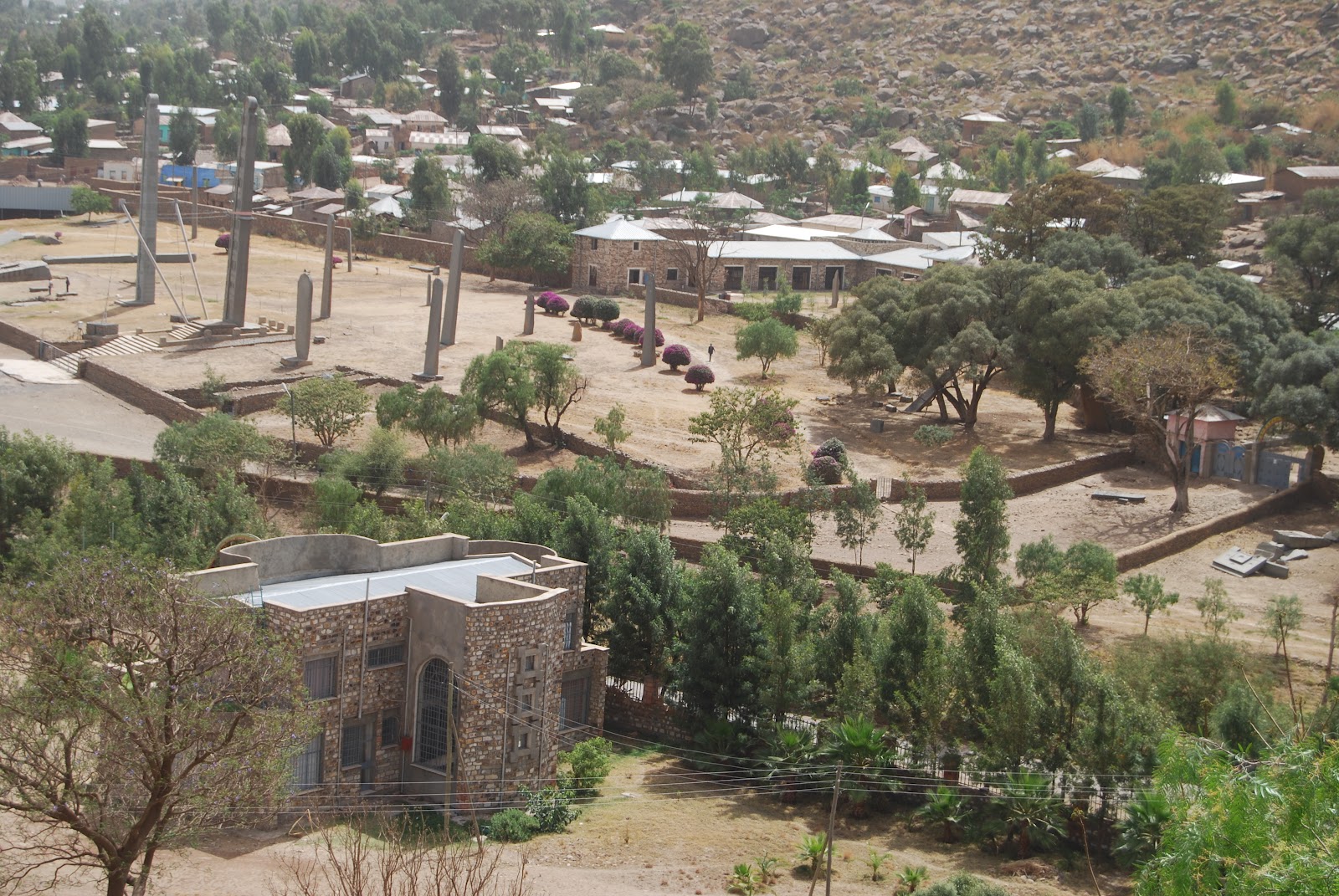
The view of the stelae park in Aksum from the hill where our hotel was located.  The building in the foreground is the home of the Bishop of the Ethiopian Orthodox Church.


The stelae park in Aksum.  The largest (13 stories) fell many years ago and still lies in broken pieces along the ground.


This is a young boy in this cactus tree with his school books.  We were so curious--and the guide told us that the sap of this tree is a very strong glue.  He was glueing his school books back together.


This is where the Ark of the Covenant is kept.  We didn't get to see it, but they all assurred us that it is truly there.


We decided that we might never have the chance to be together in Ethiopia again and we would take advantage of this opportunity to extend our trip and head up to Lalibela and Aksum.  We first flew to Lalibela early in the morning.  It was a surprise that the little town was up on the top of a high mountain—a steep climb in an old bus on switch-back roads.  The hotel we stayed in wasn’t very good, but I doubt there were any much better available. Through the hotel we did get a very good English speaking guide and transportation—which turned out to be a real blessing.  He took us to 5 of the stone churches before lunch, brought us back to the hotel for a break and then took us out for 6 more churches in the afternoon.  We really were able to see everything we wanted to in the time we had. The churches were incredible—carved out of solid stone with hand tools in about the 10th-11th century AD.  They are still actively used and we saw tremendous devotion to the Ethiopian Orthodox Church among the people all around us.  The carved detail was so beautiful—and in some there were gorgeous frescos on the walls and ceilings that were aging and were barely visible.  Near every church was a stone carved baptismal font where they had obviously practiced baptism by immersion in the early days—however, not any more.  Pictures can’t begin to do justice to the things we saw and felt.


Worshipers at the church--they carry the special sticks to lean on because the services are 2-3 hours in length and all must stand the entire time.


The churches carved out of solid rock.


Ancient frescoes--always telling Bible stories


Another one of the stone churches.  These are UNESCO World Heritage sites, so they have put huge metal shelters over them to protect them from the elements. This was done in just the last couple of years.  You can see how the churches are basically underground--you look down on them from ground level and then walk down stone stairways to get to them.


This is one of the many carved baptismal fonts.


It is so incredible that this could have been done--it's truly awe-inspiring.


Notice the detail--perfect corners.  they were actually carved from the inside out.


Thursday, June 14, 2012


Addis Ababa, Ethiopia, was truly a different world to me.  The traffic lights don’t work, so driving is really a “free-for-all”—thankfully we didn’t drive.  We stayed in the Radisson Blu, which was a very nice hotel, but all around us was real poverty.  Dave had to interview attorneys during the two days we were there, so I was free to travel with the humanitarian missionaries on the first day.  Elder and Sister Campbell are from Hurricane, Utah, and have had a hard time adjusting to the difficult circumstances of their mission.  We had a wonderful day together as they took me out to a small village about 2 ½ hours from Addis—mostly on rough, dirt roads.  There were people and animals everywhere—cows, sheep, goats, donkeys carrying everything and also pulling little carts.  There were no cars (except our jeep-the one given to the missionaries to do their humanitarian work in these isolated places).  The people obviously had to work very hard to get by, but life had a rhythm and they knew how to make it work.  The Campbells were involved with working with the community leaders to complete the water project they had begun.  The trenches still needed to be filled in and the community representatives needed to be trained to maintain the water system.  It was fun to watch them doing such a great job of working with the people—being strict and efficient--and yet kind.   Everywhere there were women and children hauling water—sometimes for long distances—and sometimes from very polluted rivers.  Getting water takes a large part of the day for most of these villagers.  What a blessing it is for the Church to make it possible to get clean water from a tap at a location very close to their home.  86% of the people in this country live in “tukul huts”—they are round, made of wood planks stuffed with mud mortar and they have conical thatch roofs.  They have one room inside with dirt floors.  The women cook with cow dung, mixed with straw, patted into a flat pancake and dried in the sun.  The smoke comes out through the thatch roof.   The children gathered all around us wherever we went and they’ve learned enough to know that when they see Americans they put out their hands and say “money, money.”  One pointed at my watch and wanted me to give it to him.  I didn’t.  The people are extraordinarily beautiful, though, and the children are very adorable.  They all loved having their picture taken and then seeing the preview on the camera.


This was the means of transportation--mules & carts--carrying bags of everything!


Actually, mules and women carry everything!

Ethiopians plant a lot of teff--an ancient grain--which they grind and use to make injera--a type of flat bread that they eat for every meal.  Notice the handmade wooden plough.


The faces of Ethiopia.  Such beautiful children always gathered around us.


This is one of the water stations.  Someone in the village will be in charge of this.  They will unlock it during certain hours of the day and put the faucets on it for the use of the villagers.  They are responsible to guard it and maintain it.


This was a flour mill where the women were grinding their teff and their corn.


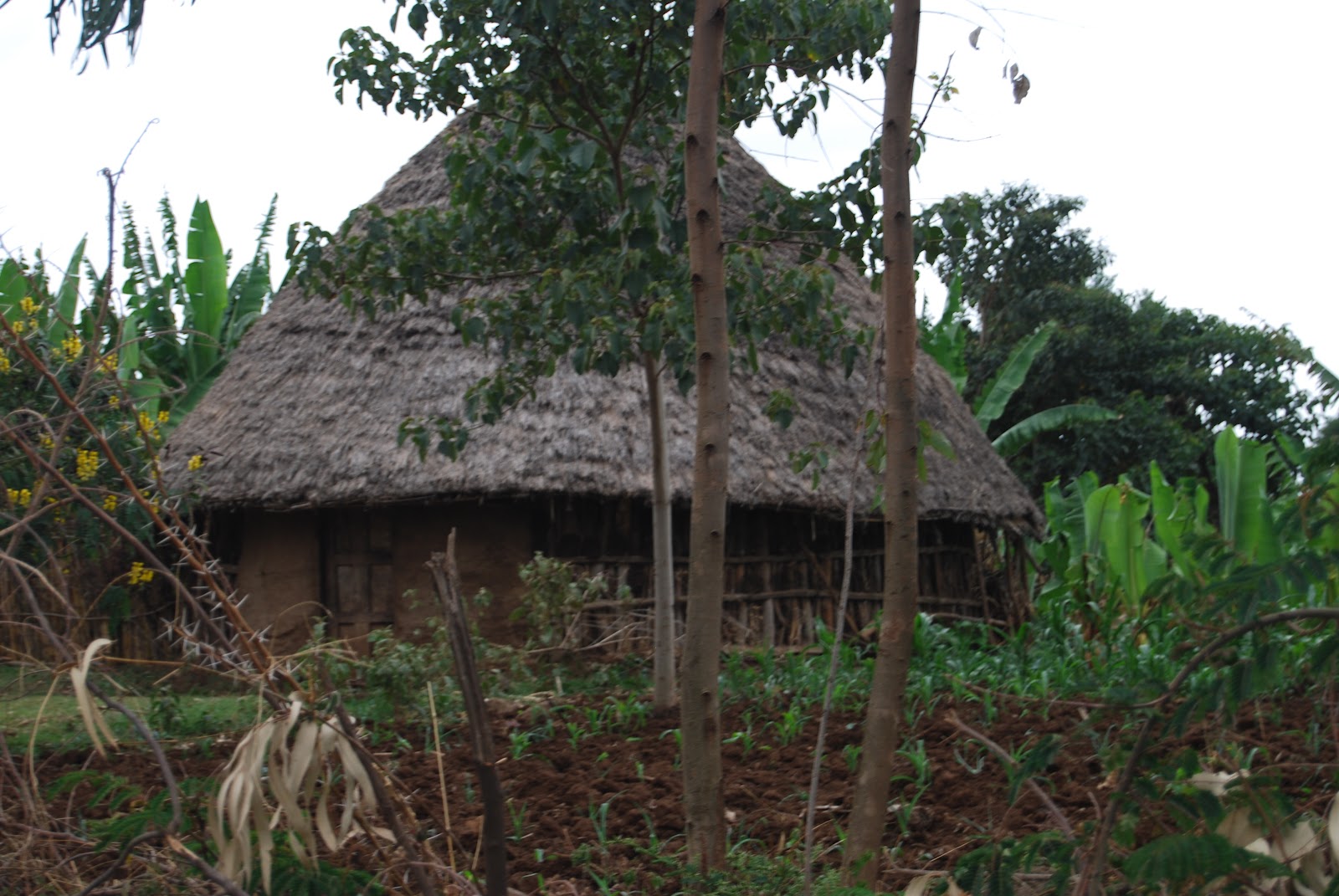
 Tukul Huts--whole families sleep, cook and live in these little houses.

Sunday, June 3, 2012


Another missionary couple who work in the Area Office in teaching employment skills, have become very involved in an orphanage in a very poor township called Tembisa.  A kind hearted woman who they all call “mama” has opened her home and her heart to abandoned babies and children.  Every two weeks this couple takes food out to the orphanage and they have also helped with making some very important improvements in the grounds and structures.   Apparently there are thousands of these unofficial orphanages throughout South Africa--all over Africa.  They invited me to go with them to deliver the food and spend an hour or so with the children.  It really was a touching experience.  The children were so loving and cute.  There are 14 who live there permanently right now—but it changes often.  Then there are some that come in and out as their families can care for them.  There really were so many needs in the facility and playground.  We are thinking about the possibility of taking on the responsibility of helping this little orphanage while we are here in Africa.  The other couple have done such a great job but they are going home in July.

 We brought some cookies for the children and they were very excited!  They all wanted a hug, too.
 All the children sleep in one room.  This is the corner for the babies.
 This is "mama"--she is a loving, selfless woman with the talent to make do with very little.
 This is the kitchen.  They did not have a stove and oven until just recently.  A missionary couple donated it--what a blessing!  This is Mama's friend who comes to help her cook for the crowds.  They mostly eat something called pap--made of ground corn.  We're going to see about getting some fruit and vegetables.
The Area President and his wife donated a clothes washer--another great blessing!
 This is the building--looking into the door of the kitchen.  To the left is the sleeping room.  They have just had a new roof donated.

The children had prepared a little program for us with songs and a play.  It was very cute!


June 2, 2012
Today was another fascinating day.  Thoba, a beautiful woman who works in the Area Office in Public Affairs, is Zulu and lives in Soweto township.  She took us on a tour of Soweto and told us about her experiences growing up during Apartheid and as a young mother during those tense and dark days when Apartheid was coming to a close.  We went to the Nelson Mandela home, the historic Regina Mundi Church where the opposition crowds gathered to demonstrate and were shot at by police, the corner where Hector Peterson was killed, and all the historical spots.  Her parents were both very involved in the ANC underground to gain freedom for the black Africans-- and her father lost his life in the process.  Her mother had joined the Church and was one of the first black Africans to become a member during that dark time.  She was jailed and interrogated many times.  Her mother really was a special person.  She found an open field and encouraged the young men to plant a garden of vegetables.  She said that for every drop of blood spilled, a flower must grow.  She was trying to channel some of the energy of hatred and frustration they were feeling into doing something worthwhile and meaningful.  Thoba didn’t even realize until many years later that her mother was burying identification papers for activists who were escaping in the vegetable garden—and passing secret ANC messages in loaves of bread.  It was just an amazing experience for us to see and hear all of this from someone who lived it.  We ate lunch at the restaurant in one of the Soweto neighborhoods—the cook was a lady who has just started her own business to survive.  We got a feel for the lifestyle of the people who live there—70,000 of them in very close quarters—with people walking everywhere—lots of them.  The townships are not places where white people would go alone.  It wouldn’t be safe.  It is pretty safe for the people who live there because they know each other and look out for each other—however, a stranger is on their own.  They practice vigilante law and punish severely any who break their rules.  We felt safe with Thoba.  


This is the Regina Mundi Church where the black youth gathered to demonstrate and many were shot by police.

These are the government issue houses that were basically two rooms.  Today, people are allowed to add additional space onto them and some have made them quite nice.


People everywhere in Africa carry all kinds of things on their heads.  This is a very usual sight.


Funerals are very big affairs here in South Africa and there were several going on in Soweto the day we visited.  They can cost as much as $40,000.  And in an area where unemployment is about 60%, that's truly amazing to me.


This is the corner where Hector Peterson was killed.  This picture was in every newspaper around the world and caused the countries of the world to bring pressure on South Africa to end Apartheid.


So many of the little dwellings have a home business in the front yard--selling food items (often homemade), cutting or braiding hair, fixing cars, etc.


These are the "unofficial settlements" that spring up in Soweto and areas all over South Africa.  There is no plumbing or electricity--very poor conditions.